

Your blueprint isn’t just a drawing. It’s your protection against fraud, your budget control, and the single reference everyone follows. Without it, you’re drowning in costs and confusion, like Pedro in the Dispatch Blueprint vs. “Diskarte”: Why Building Without a Plan Costs More
✅ Download Blueprint Verification Checklist PDF
Before You Start
☐ Have you completed the Boundary Verification Checklist?
If no, stop here and do that first. You need to know your property lines and setbacks before you finalize any blueprint.
→ Boundary Verification Checklist
Once boundaries are verified, come back here to secure your blueprint.
Step 1: Choose Your Path to Getting a Blueprint
Different situations require different approaches. Read How to Get a Blueprint in the Philippines: Costs, Scenarios, and Red Flags to understand all your options:
Tight Budget - Ready-made plans, free communities, DIY tools
Already Building Without a Blueprint - How to create a completion plan
Thinking DIY - Honest assessment of whether this makes sense for you
The Ideal Path: Hiring Professionals
The most reliable way to get a proper blueprint is to hire a licensed architect or engineer. They create plans that protect your investment and meet all legal requirements.
☐ Ready to hire a professional?
→ Use the Hiring Professionals Checklist to verify credentials and ask the right questions.
☐ Want to avoid “kakilala” mistakes and other red flags?
→ Use the 10 Red Flags When Hiring Construction Professionals
It’s Inspector Milo’s Guide to Spotting Dishonest Contractors.
Once you've chosen your path and have a blueprint in hand, proceed to Step 2 to verify it's complete and correct.
Step 2: Verify Your Blueprint (Once You Have It)
No matter which path you choose, every blueprint needs verification. Use this checklist to confirm your plan is complete and accurate.
Blueprint Completeness
☐ Floor plans for all levels
☐ Elevations (front, back, left side, right side)
☐ Site plan showing building placement on lot
☐ Foundation plan
☐ Roof plan
☐ Electrical layout
☐ Plumbing layout
☐ Structural details (beams, columns)
☐ Cross-sections/cut-through views
☐ Door and window schedules
Missing elements:
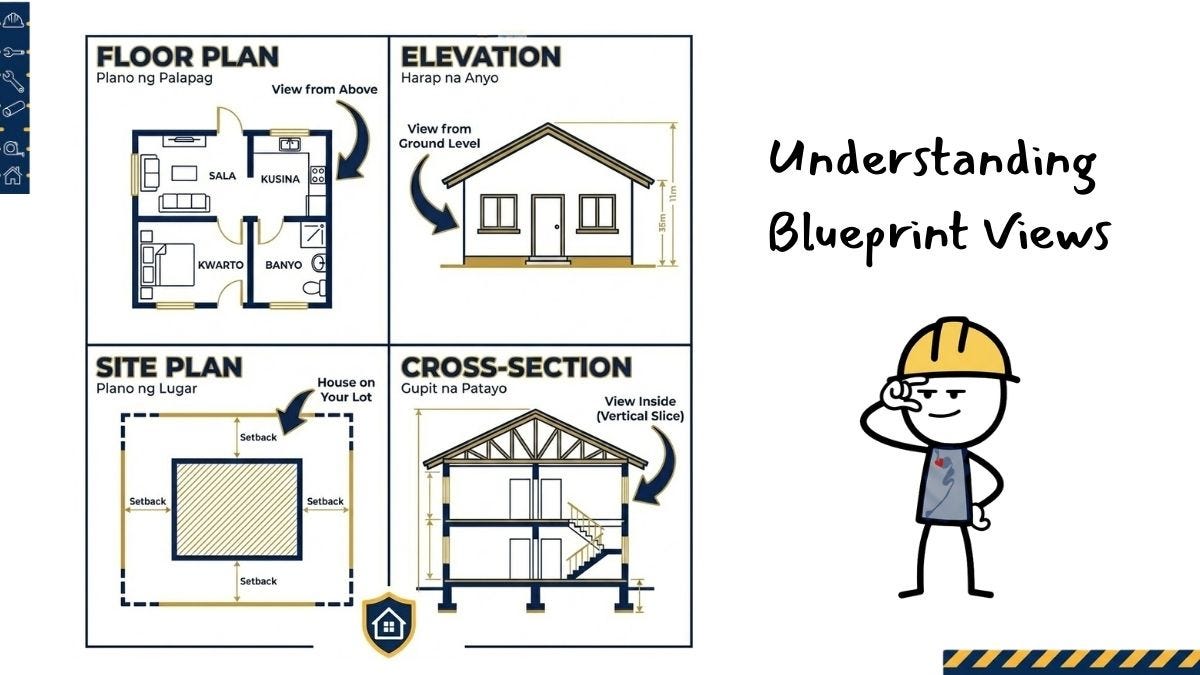
Understanding Blueprint Views
Use the image below to understand the different terms used in a blueprint view: floor plan, elevation, site plan, and cross-sections.
Professional Stamp & License Verification
☐ Architect/Engineer name visible on plans
☐ PRC license number shown
☐ Professional stamp present
☐ Plans signed and dated
Professional’s name:
License #:
Date signed:
☐ Verified license online at PRC website
License status: ☐ Active ☐ Expired ☐ Suspended
Boundary & Setback Alignment
Compare your blueprint’s site plan with your completed Boundary Verification Checklist.
Red flag: If measurements don’t match your verified boundaries, stop. Get this corrected before construction starts.
☐ Building fits completely within lot boundaries
☐ Front setback matches zoning requirement
☐ Side setbacks (left & right) match requirements
☐ Rear setback matches requirement
☐ No-build zones respected (easements, right-of-way)
☐ Building footprint matches lot survey
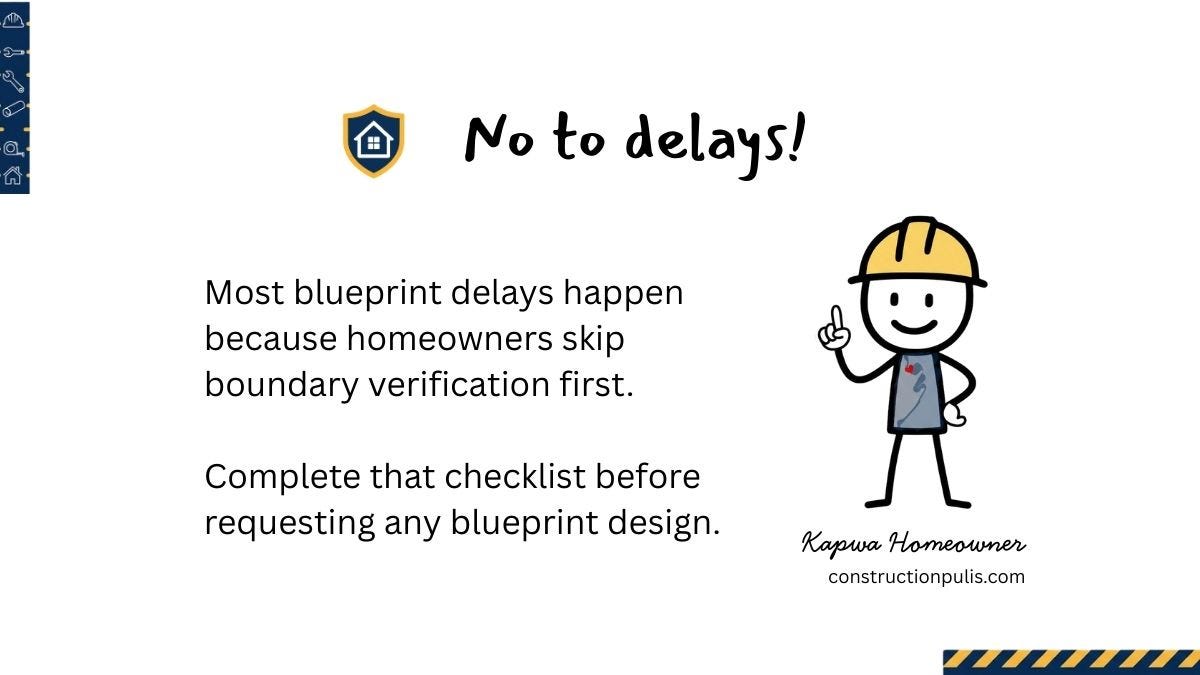
Quick Tip: Most blueprint delays happen because homeowners skip boundary verification first. Complete that checklist before requesting any blueprint design.
Building Code Compliance
☐ Zoning classification noted on plans
Classification shown:
R-1 (detached), R-2 (duplex), or R-3 (rowhouse). This determines your required setbacks.
☐ National Building Code compliance referenced
☐ Fire safety requirements addressed (if multi-story)
☐ Structural calculations included (if needed)
☐ Permit-ready (all requirements for submission included)
Read: What Every Homeowner Should Know About Setbacks, Easements, and Building Boundaries - Understand how the right mindset protects you from costly mistakes during construction.
Measurements & Specifications
☐ Floor area calculation shown and matches lot capacity
Total floor area per plan (in sqm):
☐ All room dimensions labeled clearly
☐ Wall thickness specified
☐ Ceiling heights noted
☐ Window dimensions marked
☐ Door dimensions marked
Verify: Calculate one room yourself (length × width). Does it match what the plan shows?
Room tested:
Your calculation (in sqm):
Plan shows (in sqm):
Match? ☐ Yes ☐ No (if no, question everything)
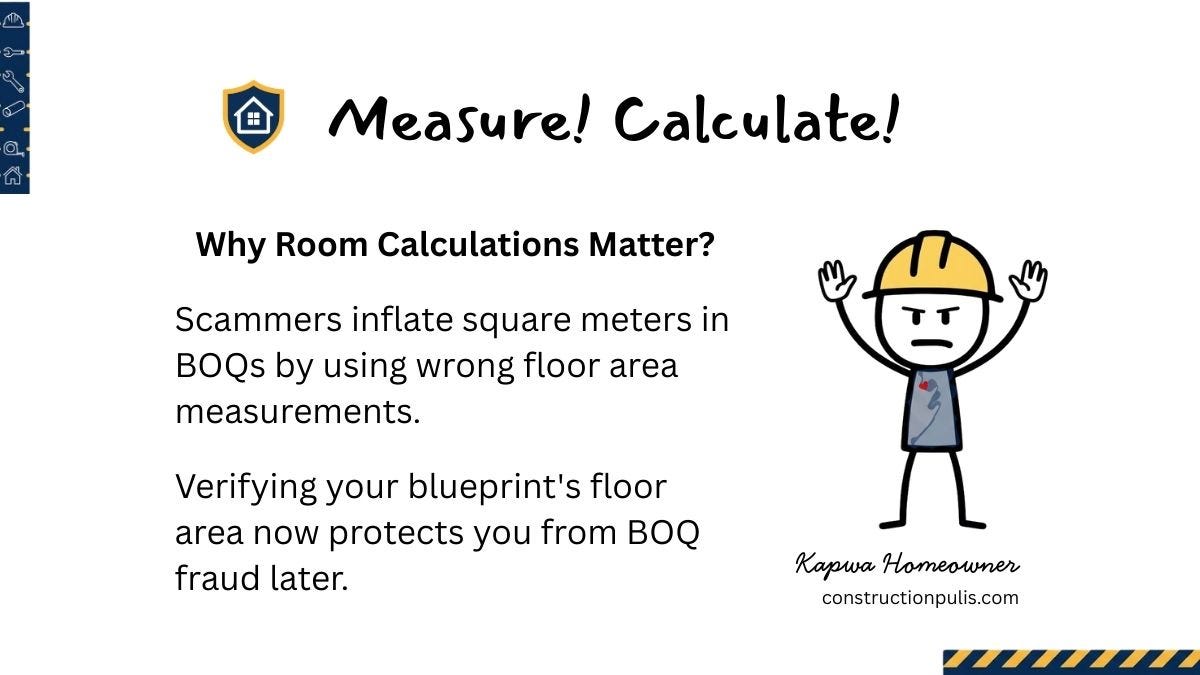
Why Room Calculations Matter: Scammers inflate square meters in BOQs by using wrong floor area measurements. Verifying your blueprint’s floor area now protects you from BOQ fraud later.
☐ Want to know more about measuring your floor area?
→ Read The Number That Multiplies Everything: Why Scammers Start With Floor Area
Does It Match Your Actual Needs?
☐ Number of rooms matches what I need
Bedrooms needed:
Plan shows:
Bathrooms needed:
Plan shows:
☐ Kitchen placement works for me
☐ Bathroom placement makes sense
☐ Living areas sized appropriately
☐ Storage/utility areas included
Special requirements addressed:
☐ Accessibility needs
☐ Home office space
☐ Parking/garage
☐ Outdoor space
☐ Other:
☐ Layout functions for intended use
Intended use: ☐ Family home ☐ Rental ☐ Mixed use
☐ Square meters align with my budget
My budget per sqm:
Total sqm:
Estimated cost:
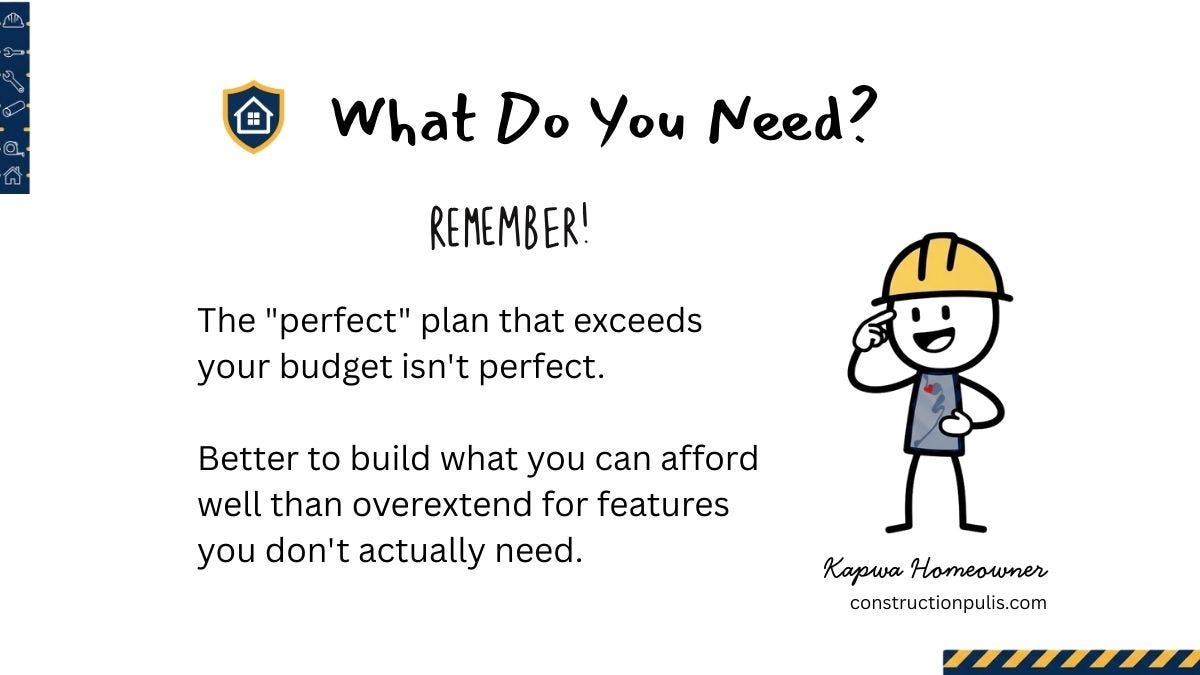
Remember: The "perfect" plan that exceeds your budget isn't perfect. Better to build what you can afford well than overextend for features you don't actually need.
Documentation & Storage
☐ Received complete set of plans (all sheets)
Number of sheets:
☐ Digital copies saved
Saved at (location):
☐ Physical copies stored safely
Stored at (location):
☐ Extra copies made for:
☐ Contractor
☐ On-site reference
☐ Building permit office
☐ Personal backup
Blueprint Verification Complete
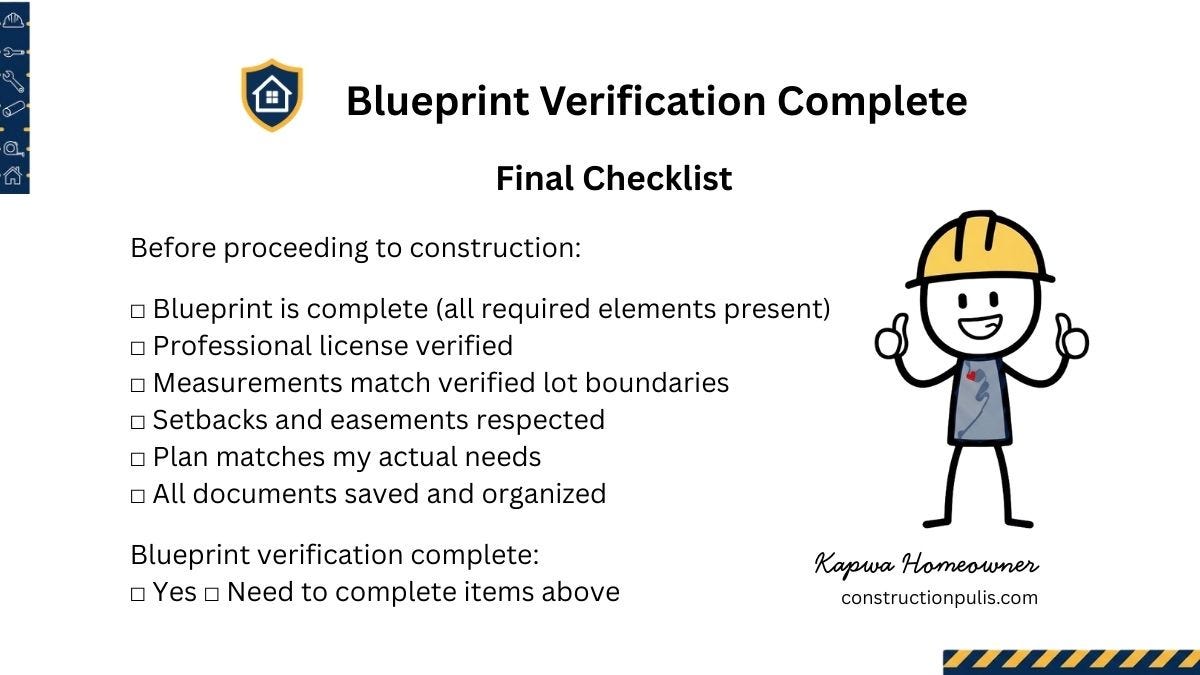
Final Check
Before proceeding to construction:
☐ Blueprint is complete (all required elements present)
☐ Professional license verified
☐ Measurements match verified lot boundaries
☐ Setbacks and easements respected
☐ Plan matches my actual needs
☐ All documents saved and organized
Blueprint verification complete: ☐ Yes ☐ Need to complete items above
Disclaimer: Kapwa Homeowner is not a licensed engineer, architect, or construction professional. The information shared on Construction Pulis is for educational purposes only and should not replace professional advice. Every construction project is unique, so always consult licensed professionals for your specific situation.