


The Hiring Professionals Checklist gives you the step-by-step verification process. This Alert shows you the warning signs.
These aren’t just “be careful” suggestions. These are tactics dishonest professionals use to set you up for scams. If you see these red flags, walk away.
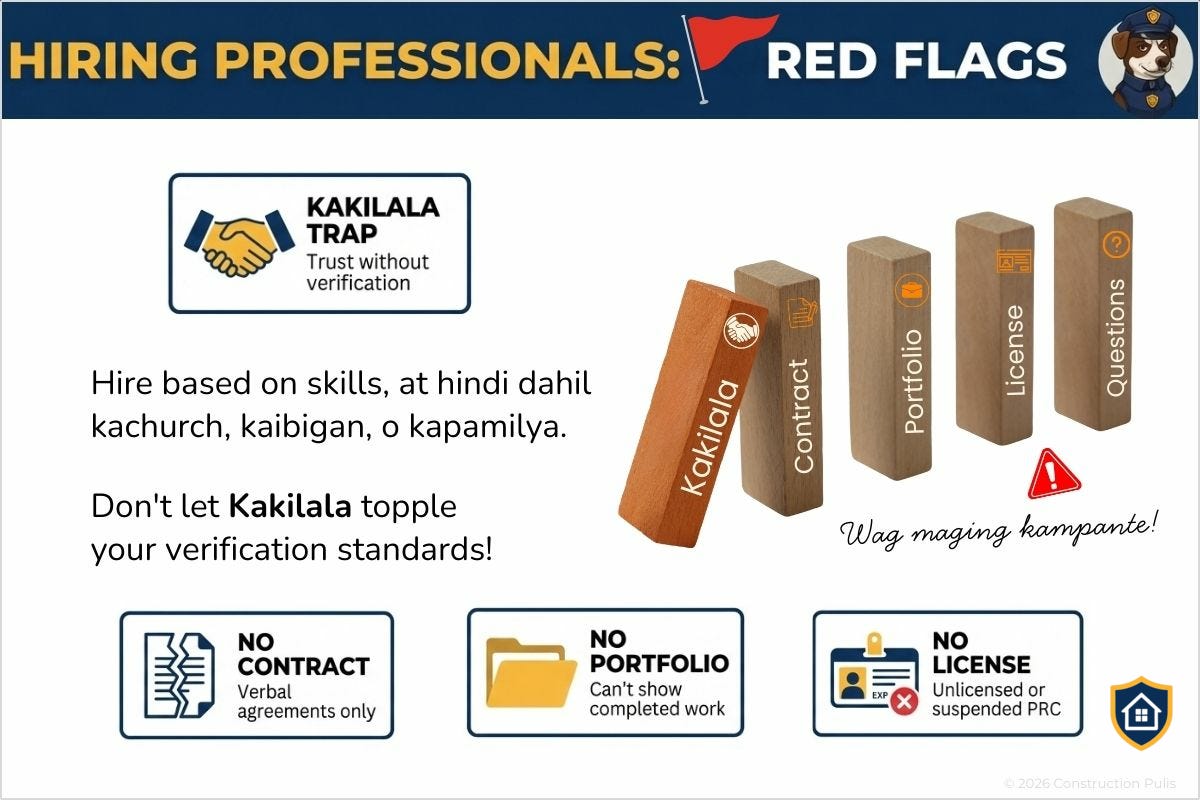
Red Flag #1: The “Kakilala Lang” Trap
What they say:
“We’re family friends/church members/neighbors. No need for formalities. Trust lang.”
What it actually means:
Using that “kakilala relationship,” they become comfortable with no contract (Red Flag #2), they may not show a serious portfolio (Red Flag #3), and since you trust them, you might never find out that their license has expired (Red Flag #4).
What you should do:
Treat kakilalas exactly like strangers. Ask for PRC license, portfolio, contract, everything. Real professionals who respect you will understand. Scammers will get offended.
Para walang palusot:
Friendship or any “kakilala relationship” doesn’t exempt professionals from doing their job properly. If they can’t handle verification, they’re not your friend, and they’re definitely not your professional.
Red Flag #2: No Written Contract or One-Page “Agreement”
What they say:
“We don’t need a formal contract. We trust each other.”
Or, hands you a one-page note with vague terms.
What it actually means:
Without a proper contract, you have no legal protection when things go wrong.
What you should do:
Demand a complete contract covering scope, timeline, payment, revisions, and termination terms. Don’t sign until you understand every clause.
Para walang palusot:
Real businesses protect both parties with contracts. Without one, you have no legal protection—verbal agreements don’t hold up in court, and one-page “agreements” skip crucial clauses.
Red Flag #3: No Portfolio or “Trust Me” Portfolio
What they say:
“I have lots of projects, but I can’t show you because of client confidentiality.”
“Here are some renders/photos I found online.”
What it actually means:
They either have no completed work or they’re showing you someone else’s projects.
What you should do:
Ask for at least 3 actual completed houses you can visit or verify. Check if photos match reality. Google reverse-image search their portfolio to catch stolen images—upload their photos to Google Images, and if the same photo shows up on other websites or platforms, they’re lying.
Para walang palusot:
Legitimate professionals are proud of their work and eager to show it. “Client confidentiality” is often code for “I have nothing to show you.”
Red Flag #4: Can’t Provide or Verify PRC License
What they say:
“I’m still processing my license.”
“I work under another architect’s name.”
“I have years of experience, license is just paperwork.”
What it actually means:
They’re practicing illegally. No license means no accountability to the PRC. They can disappear, and you can’t file professional complaints.
What you should do:
Verify the PRC license yourself on prc.gov.ph. If they can’t provide it or it’s expired/suspended, walk away immediately.
Para walang palusot:
Hiring unlicensed professionals is like hiring a driver without a license. When the “crash” happens, you’re both screwed.
Red Flag #5: Rushing You to Sign
What they say:
“This offer is only good today.”
“I have other clients waiting, decide now.”
“Why do you need to think about it? Don’t you trust me?”
What it actually means:
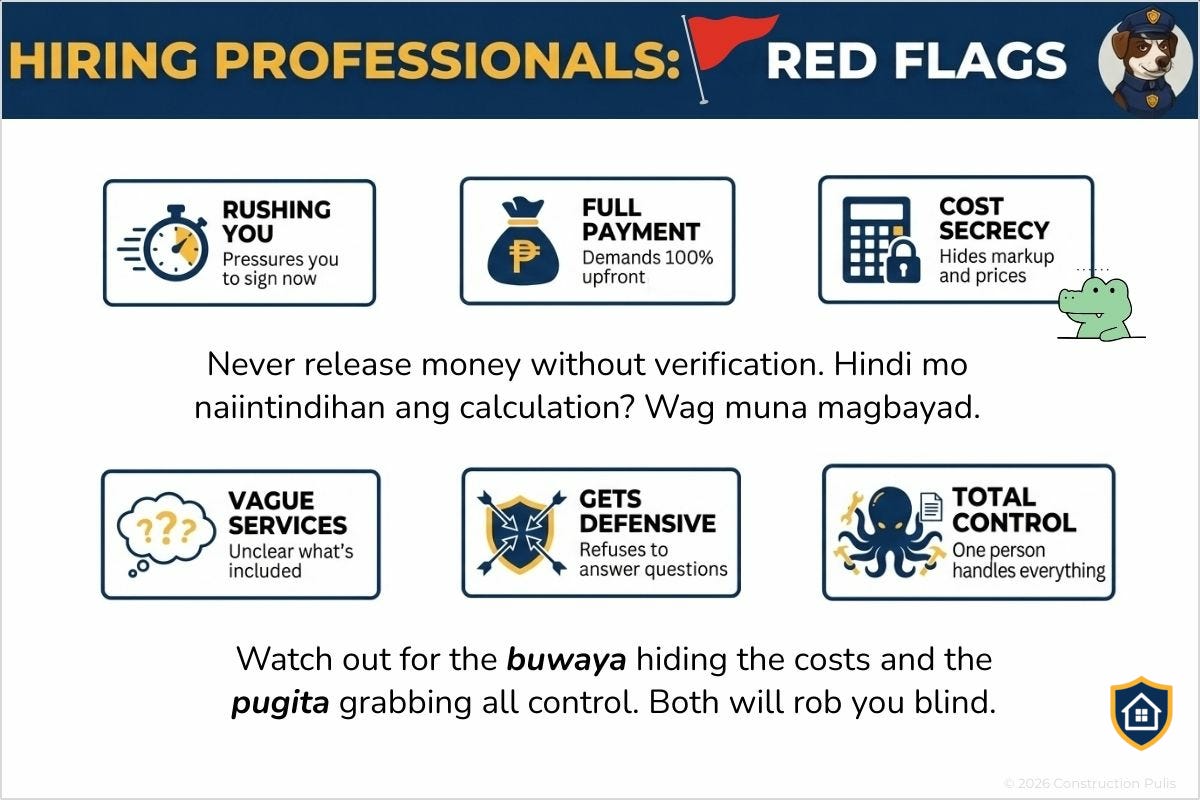
They don’t want you to have time to verify, research, or think clearly. Rush you into signing today, and you won’t actually read or understand what’s in the contract.
What you should do:
Take the contract home. Read it carefully. Have someone else review it. Research them thoroughly. If they can’t wait a few days, that’s their problem, not yours.
Para walang palusot:
Your house is a lifetime investment. Anyone who can’t give you time to verify isn’t worth hiring.
Red Flag #6: Full Payment Upfront Demand
What they say:
“I need the full amount to start.”
“It’s standard practice.”
“Other clients pay me this way.”
What it actually means:
Once they have your money, they have zero incentive to finish properly or on time. They can disappear, delay indefinitely, or deliver garbage work, and you have no leverage (wala kang laban).
What you should do:
Never. Pay milestones only: Initial concept, design approval, permit-ready documents, final completion. Each payment tied to a deliverable.
Para walang palusot:
Legitimate professionals work on milestones because they’re confident in their work. Full payment upfront removes all your protection.
Red Flag #7: Markup or Cost Secrecy
What they say:
“Don’t worry about the costs, I’ll handle it.”
“Trust me, these are the best prices.”
Or refuses to show you material price sources or markup calculations.
What it actually means:
They’re hiding inflated prices or excessive markups.
What you should do:
Demand transparency. Ask for material sources and price quotations. Research prices yourself. Understand markup percentages. Not familiar with markups? Read Philippine Construction Markup Rates: What is a Fair Contractor Fee?
Para walang palusot:
Honest professionals show you the numbers because they’re fair. Hidden numbers mean hidden fraud.
Red Flag #8: Vague Service Descriptions
What they say:
“I’ll handle everything.”
“Don’t worry, it’s all included.”
“We’ll figure it out as we go.”
What it actually means:
Vague terms set you up for surprise charges and disputes over what’s “included.”
When you ask later, “Bakit biglang may dagdag?”, they’ll point to vague wording: “Hindi specific yan sa agreement.” Whether there’s no contract at all or just unclear terms, you end up paying more.
What you should do:
Force specifics. What exactly is included? Drawings only, or supervision too? Permit processing, or just the design? Get it in writing.
Para walang palusot:
Professionals who genuinely want to help you will be clear about their services. Any vagueness in the contract or agreement is a setup for extra charges.
Red Flag #9: Gets Defensive About Questions
What they say:
“I’m the professional here, just let me do my job.”
“Other clients don’t ask this many questions.”
What it actually means:
If they get annoyed, dismissive, or try to shut down your questions, that’s the red flag.
What you should do:
Keep asking anyway. Ask about their license, portfolio, contract terms, and everything else you don’t understand, or want to clarify.
Para walang palusot:
Good professionals welcome questions because they have nothing to hide. Defensive reactions reveal guilt, not professionalism.
Red Flag #10: Separation of Roles? What’s That?
What they say:
“I’ll design it, supervise construction, buy materials, handle payments, manage workers, everything.”
What it actually means:
One person controlling everything means zero checks and balances.
What you should do:
Separate the roles. One person designs, another supervises, and another handles purchasing. They check each other.
Para walang palusot:
Kapwa Homeowner learned this the hard way. Her engineer controlled everything and inflated things freely. Don’t make that mistake.
Watch out for the buwaya hiding the costs and the pugita grabbing all control. Both will rob you blind.
If You See These, Don’t Justify Them
“But he’s a family friend...”
“But he goes to our church...”
“But he said he’d give me a discount...”
“But I already gave a deposit...”
Stop. Red flags are red flags that need your immediate action.
What You Do Next
If you’re about to hire someone:
Use the Hiring Professionals Checklist to verify them properly before signing anything.
If you’ve already hired someone and see these red flags:
Document everything. Review your contract. Consider terminating before losses get bigger.
If you’re not sure about your construction status:
Read How to Get a Blueprint in the Philippines: Costs, Scenarios, and Red Flags for guidance on different hiring scenarios.
Inspector Milo is Construction Pulis’s vigilant mascot who shows up with warnings and reminders to homeowners. Para walang palusot. 🐾